NIH Curing The Epilepsies Meeting

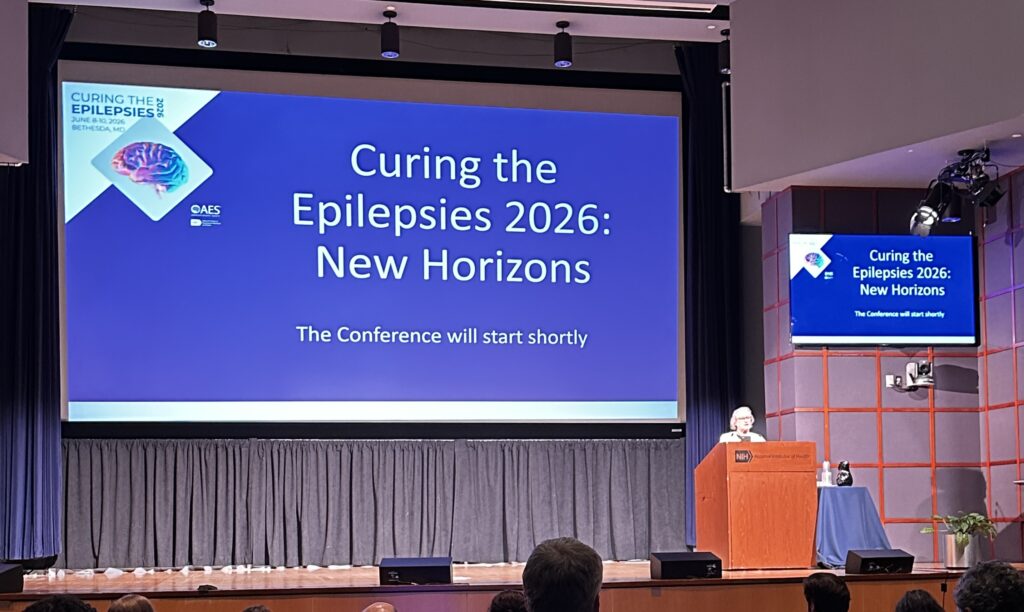
Last week, I attended the Curing the Epilepsies Meeting 2026 meeting at the National Institutes of Health NIH in Bethesda, MD.
The Curing the Epilepsies 2026 conference brought together researchers, clinicians, advocates, industry leaders, and advocates to help define the most important priorities for epilepsy research over the next five years. The meeting highlighted both the progress that has been made and the challenges that remain for people living with epilepsy.
A major theme of the meeting was the importance of the National Institute of Neurological Disorders and Stroke (NINDS) Epilepsy Research Benchmarks, which help guide research funding and priorities. Over the past two decades, the benchmarks have led the way for major advances, including the discovery of hundreds of genes related with epilepsy, the development of precision medicine approaches, new gene-targeted therapies, improved understanding of sudden unexpected death in epilepsy (SUDEP), and the approval of new treatments.
Researchers discussed advances in epilepsy genetics, including the identification of rare genetic causes of epilepsy, the role of somatic mutations that occur in only a subset of cells, and the use of artificial intelligence (AI) to better understand disease mechanisms, among other things. Speakers emphasized that genetic testing is extremely important because it can help guide diagnosis, treatment decisions, and participation in clinical trials.
Different presentations focused on developing better disease models. Last year, the NHI announced that is now moving away from animal models towards human-based approaches instead. However, NINDS members as well as other scientists participating at this conference said that this does not mean that animal models don’t remain valuable and necessary in different cases, based on the questions that are being asked in a research study. Other models that are being implemented include the use of patient-derived stem cells (induced pluripotent stem cells), brain organoids, and computational models to better understand epilepsy and test potential therapies – and thankfully, these are all being utilized already in the GLUT1 Deficiency research community.
The meeting also highlighted some treatment strategies for epilepsy. These include gene therapies, RNA-based therapies such as antisense oligonucleotides (ASOs), small molecules, drug repurposing efforts, and neuromodulation devices. Researchers emphasized that future treatments should aim not only to reduce seizures but also to improve cognition, development, quality of life, and overall health.
Another important aspect that was discussed was the need for better biomarkers and clinical trial readiness. Researchers are working to identify better biomarkers, such as quantitative EEG biomarkers, that can help track disease progression and treatment response. Speakers highlighted the importance of understanding how epilepsy affects people throughout their lifespan and ensuring that clinical trials measure outcomes that matter most to patients and families.
Artificial intelligence and large-scale data sharing was one of the topics that were discussed in breakout sessions as important tools for the future. AI is being used to analyze EEGs, identify seizures, predict treatment responses, and accelerate scientific discovery. In addition, collaboration across fields was a topic that was brought up as a way to advance research and therapeutic development.
Participants emphasized the importance of health equity, access to care, and translating scientific discoveries into treatments for all the patients in need. Some of the discussions included improving diagnosis and treatment for all, improving access to clinical trials, increasing public awareness, and supporting the proposed National Plan for Epilepsy Act, which goal is to create a comprehensive national strategy to improve outcomes for people living with epilepsy.
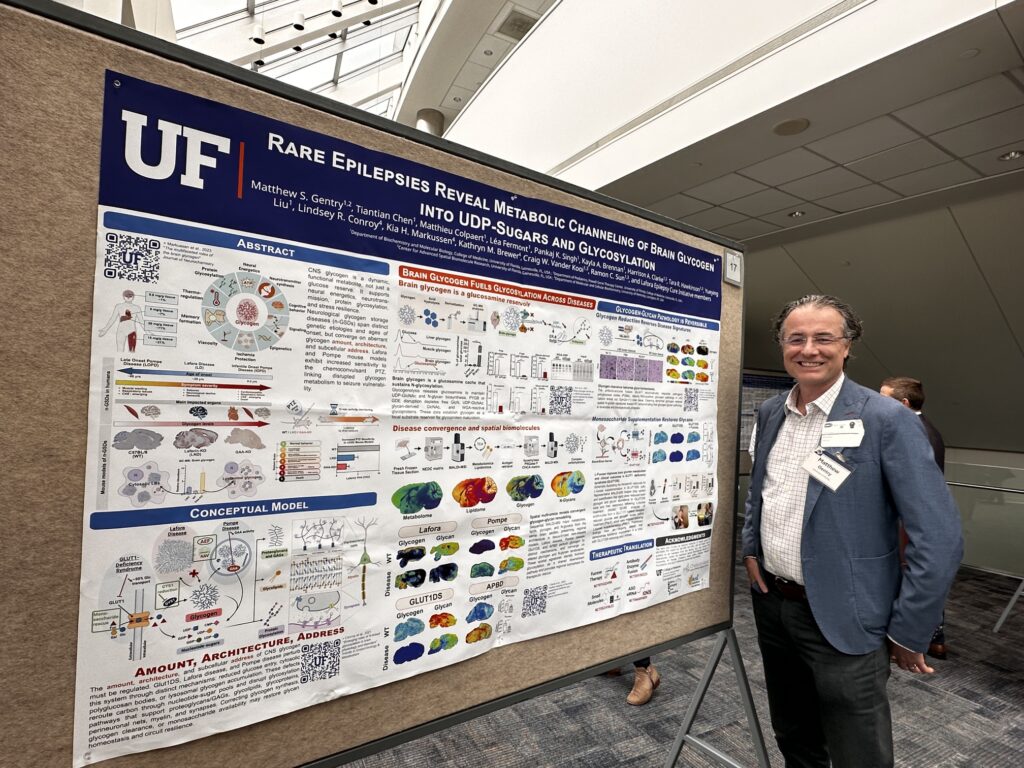
Finally, I wanted to share that our Science Advisor, Dr. Matt Gentry presented a poster with the title “Rare epilepsies reveal metabolic channeling of brain glycogen into UDP-sugars and glycosylation.” In this poster he shares some of the data from the fucose study in GLUT1 Deficiency and shows how fucose supplementation can restore glycans.
Overall, the meeting was a wonderful opportunity to bring experts together and set the priorities for research and care for all the people living with epilepsy.