New Publication – GLUT1 Deficiency in Argentina

Hello and welcome to Science with Sandra!
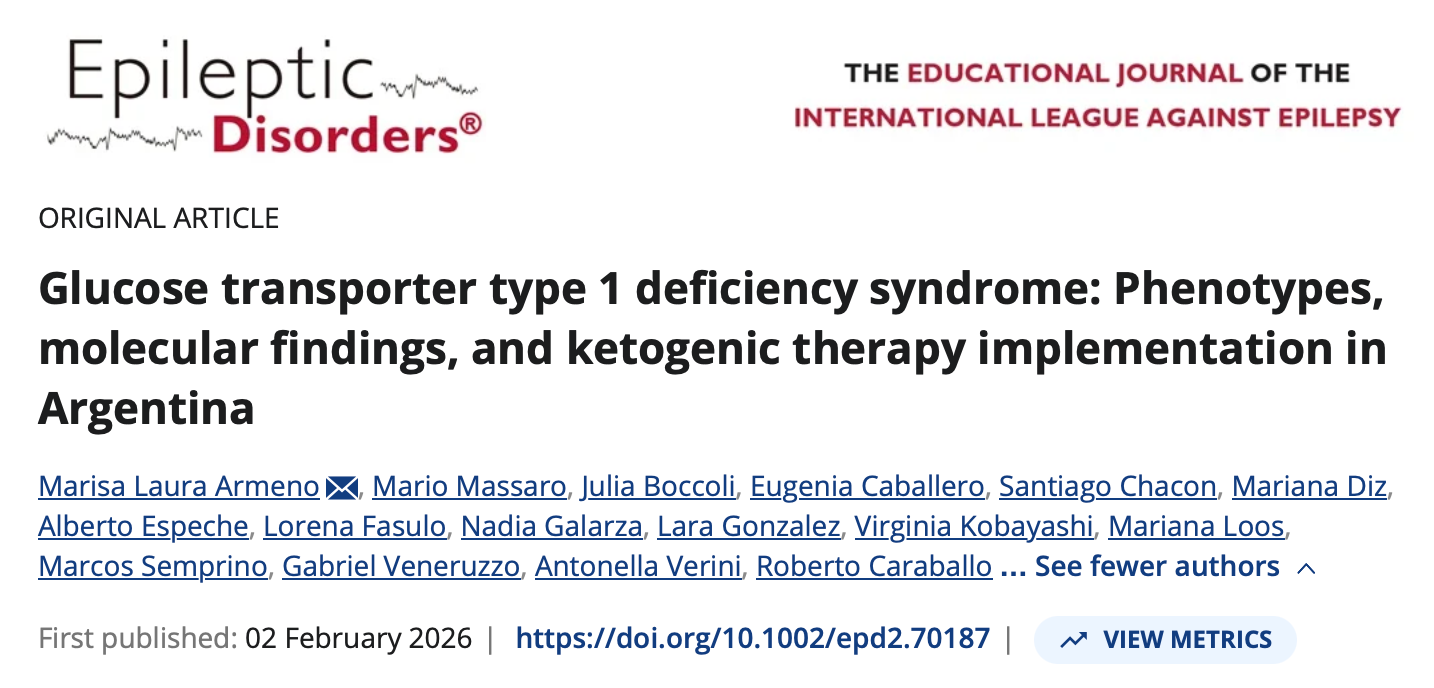
For this edition I would like to highlight a recent publication by Dr. Marisa Armeno and colleagues, “Glucose transporter type 1 deficiency syndrome: Phenotypes, molecular findings, and ketogenic therapy implementation in Argentina”.
Dr. Armeno is a pediatrician specialized in clinical nutrition and ketogenic dietary therapies, with over 15 years of experience in the clinical management of patients with Glucose Transporter Type 1 Deficiency Syndrome (GLUT1DS). She has been actively involved in the care, follow-up, and long-term metabolic management of individuals within the GLUT1 Deficiency community in Buenos Aires, Argentina.
She is a member of our advisory board and is part of the Executive Committee of the International Neurological Ketogenic Society (INKS) and the International League Against Epilepsy (ILAE) Dietary Treatments Task Force.
The purpose of this study was to describe a group of pediatric and adult GLUT1 Deficiency patients in Argentina, including the clinical symptoms at the time of diagnosis and their experience with the ketogenic dietary therapy.
This study is the first national report from Argentina describing people diagnosed with GLUT1 Deficiency. Dr. Armeno and colleagues wanted to describe the symptoms seen in Argentine patients, analyze the genetic findings, evaluate how well the ketogenic diet worked for them, as well as to understand challenges in diagnosis and access to treatment.
A total of 39 patients (children and adults) from eight medical centers across Argentina were included.
Demographics
- 39 total patients
- 64% male
- Ages ranged from toddlers to 44 years old
- 74% were children
One key finding was the long diagnostic delays with a mean age diagnosis of 4.6 years, which is similar to findings in other studies including our Collective Voices survey where we reported that survey participants on average had a diagnostic journey of 2.8 years.
This means many children lived for years with symptoms before receiving the correct diagnosis.
Encouragingly, after educational efforts in Argentina beginning in 2018 when thanks to the support of the GLUT1 Deficiency Foundation, Dr. Joerg Klepper gave lectures in Argentina as well as other clinical awareness efforts led by Dr. Armeno, diagnosis has started happening earlier.
Symptoms
As it is known, GLUT1 Deficiency can look very different from one person to another. This study showed a wide range of symptoms.
1. Seizures were experienced by 74% of patients, and the median age at symptom onset for seizures was 6 months.
- Absence seizures (brief staring spells) (62%)
- Generalized tonic-clonic seizures (52%)
- Focal seizures (34%)
- Myoclonic-atonic seizures (14%)
2. Movement Disorders were experienced by 79% of patients.
The common types included:
- Ataxia (67%)
- Dystonia
- Paroxysmal dyskinesias
- One patient had alternating hemiplegia
- Able to walk independently (87%)
- Importantly, all patients had paroxysmal eye-head movements, a characteristic early sign of GLUT1 Deficiency.
- Cognitive impairment was common
- 66% had intellectual disability
- 38% microcephaly
- 56% had speech difficulties
- 72% had psychomotor delays
Even when seizures improved, motor coordination challenges often remained.
Genetic Findings
Most of the patients (95%) had a variant in the SLC2A1 gene.
Key findings:
- 33 unique genetic variants were identified
- 91% were classified as pathogenic or likely pathogenic, while the remaining variants were classified as variants of unknown significance (VUS)
- One-third of the variants were newly discovered variants
- Most mutations occurred spontaneously (not inherited)
- A few cases were inherited
- One mother was found to carry the gene change but had no symptoms
- One case was reported as homozygous recessive inheritance. In most of the cases, GLUT1 Deficiency is inherited as a heterozygous dominant trait.
This study highlights how genetically diverse GLUT1 Deficiency can be.
- 97 % of patients received ketogenic dietary therapy (KDT).
- 76% received the classic ketogenic diet with the 4:1 ratio being the most common initial ratio
- 16% received the modified ketogenic diet
- 5% received the Modified Atkins diet
Interestingly, the GLUT1 Deficiency asymptomatic mother was started on the Low Glycemic Index Therapy (LGIT) at 25 weeks of gestation during her second pregnancy. The diet was proved feasible, achieved mild ketosis and allowed careful nutritional and metabolic monitoring. The choice of this diet balanced the goal of providing an alternative brain fuel for the baby and a more moderate ketogenic load and improved tolerability for the mother.
The results showed that the diet was more successful for seizure, although there were also reports of benefits regarding improved coordination and balance, cognition and attention, increased energy and improved behavior.
MCT Oil
About 64% of patients used medium-chain triglyceride (MCT) oil as part of their ketogenic regimen, which contributed on average 27% of the total dietary fat.
Patients reported experiencing benefits from MCT use including better ketosis, energy and cognitive function and no major side effects were reported.
In conclusion, this is the first national Argentine study on GLUT1 Deficiency and shows that it is still highly underrecognized in Latin America. There is currently limited awareness among healthcare professionals in Latin America, misdiagnosis, lack of systematic screening protocols, and barriers to genetic testing, contributing to a significantly long diagnostic journey for patients and their families.
This study also shows that ketogenic dietary therapy is the therapy of choice and can be implemented and adapted depending on the patients’ needs and what they have locally available. As a next step, Dr. Armeno and her colleagues are working towards the establishment of a national registry and collaborate across Latin America to improve diagnosis, dietary protocols, and long-term follow-up.
Finally, we thank Dr. Armeno and her colleagues for the effort they’ve put on this study and publication and for caring for patients in our GLUT1 Deficiency community!
Thank you for visiting our blog and please do not hesitate to contact me if you have any questions at [email protected].
Related Posts